Best AI Tools by Category: What to Look for in 2026
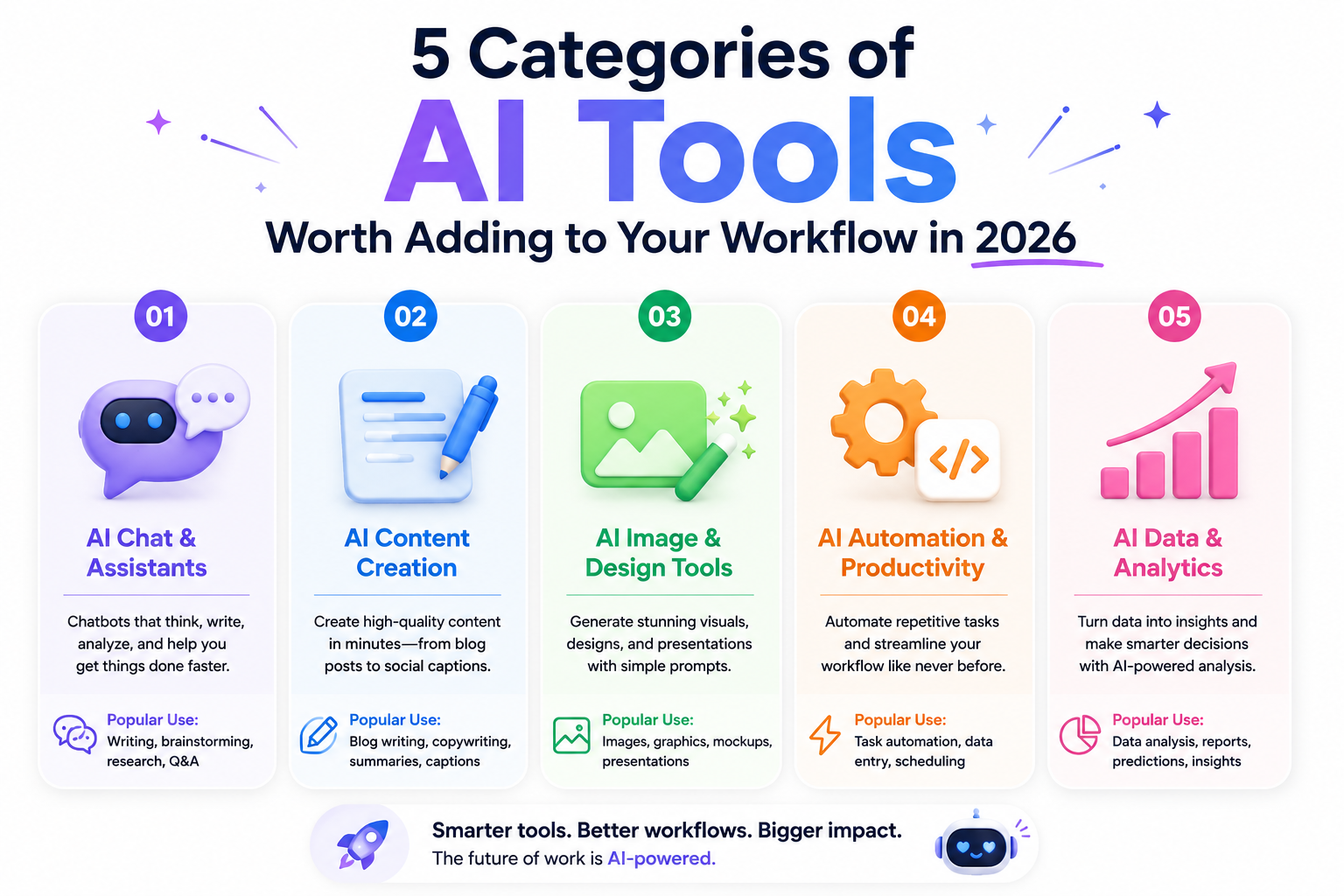
If you're trying to figure out which AI tools are actually worth your time, the answer comes down to categories. The tools worth adopting today are the ones that quietly remove friction from a specific part of your workflow rather than promising to do everything. Here are five categories consistently worth a look — and what actually separates a useful tool from a gimmick in each one.
1. Writing and content assistants
The best writing tools now go beyond autocomplete — they help with structure, tone-matching, and editing existing drafts rather than just generating from scratch. When evaluating one, check how well it preserves your own voice instead of flattening everything into generic copy. A well-curated AI tool directory can help you compare options side by side.
2. Research and summarization tools
Tools that can pull from multiple sources, cite them clearly, and summarize long documents save real time. The key differentiator is traceability: a good research tool shows you where a claim came from so you can verify it, rather than presenting synthesized answers as unquestionable fact. Look for built-in citation formatting and source linking when you evaluate.
3. Automation and workflow connectors
These tools link the apps you already use — email, calendars, spreadsheets, CRMs — so tasks move between them without manual copying. Look for ones with clear audit trails and easy rollback, since automation mistakes compound quickly if you can't see what changed. Check integrations before committing: the best connectors play nicely with your existing stack.
4. Image and design generation
Generative image tools have become genuinely useful for drafts, banners, and concept art. The gap between tools is mostly in control: how precisely you can direct style, composition, and edits, versus how much you're left rerolling random outputs. Compare iteration speed and export quality when testing — those matter most in practice.
5. Coding and technical assistants
For developers, the highest-value tools are the ones integrated directly into the editor and codebase context, not standalone chat windows. They're most useful for boilerplate, refactors, and explaining unfamiliar code — less so for architecture decisions, which still need a human call. Prioritize IDE integration and context awareness over raw chat features.
How to pick the right AI tool for your workflow
The common thread across all five categories: the tools worth keeping are the ones that fit into an existing workflow, not the ones that ask you to build a new workflow around them. Start with the single task costing you the most time each week, and evaluate tools against that specific bar before adding anything else to your stack. Test each tool on a real task — not a toy example — and keep only what earns its place.