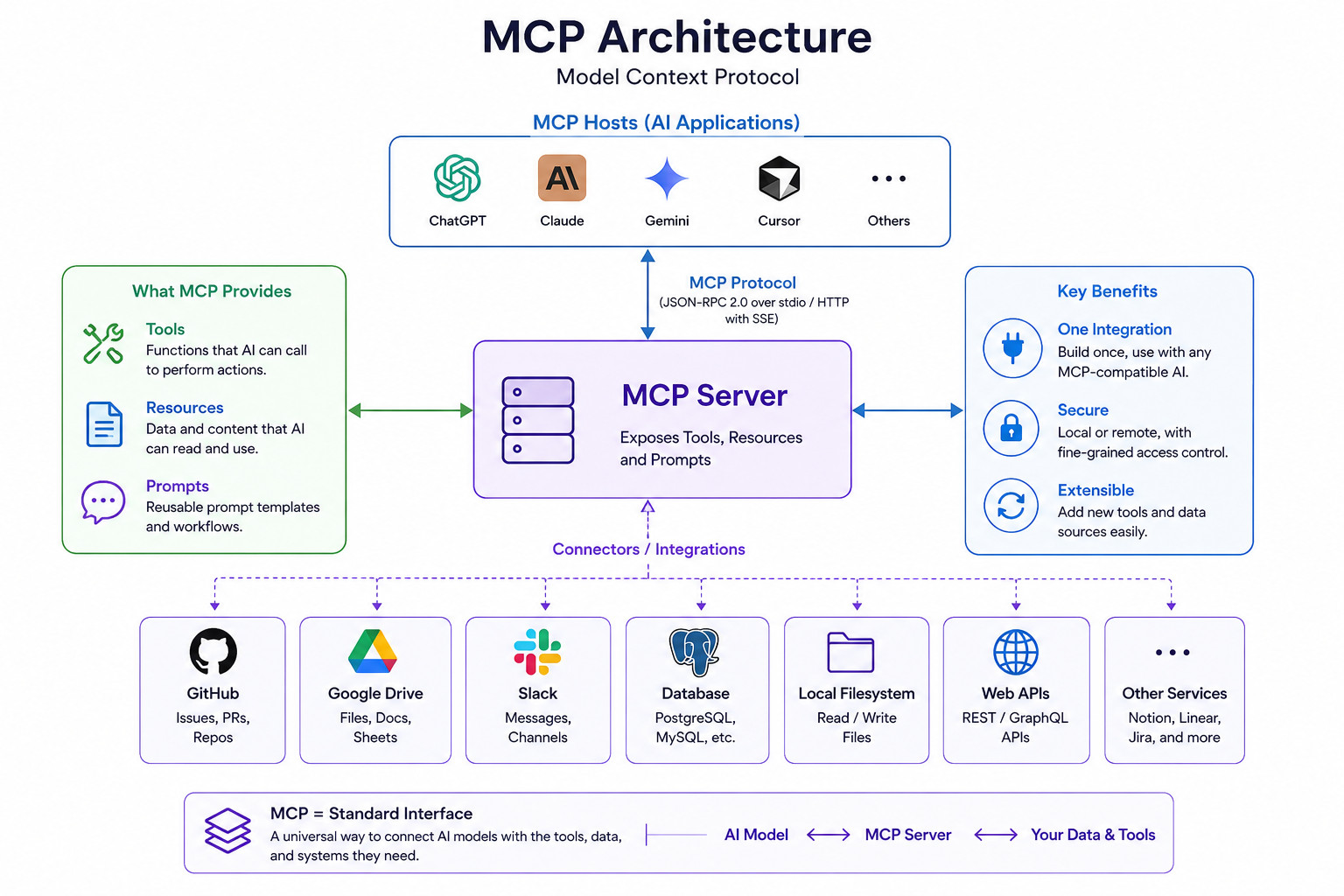
MCP Goes Stateless — Making AI Agents Production-Ready
On July 28, the Model Context Protocol (MCP) shipped its biggest specification update yet — going fully stateless at the protocol layer. The change drops sticky sessions and shared Redis-backed stores, replacing them with an architecture any server instance can handle behind a plain round-robin load balancer. It is the infrastructure update that turns agent demos into production-deployable systems.
Most of the AI industry's attention this year has gone to model releases — bigger context windows, faster inference, flashier demos. But the piece of infrastructure quietly holding the entire agent ecosystem together just got its biggest overhaul, and almost nobody outside of infra teams noticed.
What the 2026-07-28 MCP spec actually changes
MCP is the open standard that lets AI agents — from Claude to enterprise copilots — discover and call external tools and data sources in a consistent way. If you have used an AI agent that reads a file, queries a database, or hits an API on your behalf, there is a good chance MCP is the wiring underneath it.
The Agentic AI Foundation, the Linux Foundation-directed body that now stewards MCP, shipped the "2026-07-28" specification. The headline change is statelessness: earlier versions assumed a server could hold session state in memory, requiring sticky sessions, shared Redis-backed session stores, or deep packet inspection to route requests. That requirement is gone.
Alongside statelessness, the spec adds enterprise-focused changes:
- Multi Round-Trip Requests — letting a single tool call span several back-and-forth exchanges without holding a session open
- Header-based routing and cacheable list results — cutting latency and load on tool servers
- A hardened OAuth 2.0/OIDC-aligned authorization model — closing gaps that made enterprise security teams nervous about agent tool access
- A formal extensions framework plus a conformance-suite requirement — so future spec changes are less likely to break existing integrations
Infrastructure providers moved fast. AWS AgentCore Gateway and several other agent-hosting platforms published migration guides within days of the release — a clear sign this was not a spec update sitting on a shelf.
Why this matters more than another model launch
Every new model release makes agents smarter. This update makes agents deployable. The gap between a cool agent demo and an agent running in production at a bank or hospital has mostly come down to boring operational questions: can it scale horizontally, can security sign off on the auth model, will a spec change six months from now break the integration. The 2026-07-28 MCP spec answers all three.
It is also a signal about where the center of gravity in AI is shifting. A year ago, the interesting fights were about which lab had the best model. Increasingly, the interesting fights are about which standards and plumbing the entire ecosystem routes through — and MCP, largely uncontested as the tool-calling standard, just made itself a lot harder to route around.
What to do next
For any team building or buying agentic AI tools, the practical takeaway is straightforward: if your agent stack talks MCP, budget time this quarter to migrate to the new spec. The stateless architecture alone will simplify infrastructure enough to justify the migration on its own — and the new authorization and extension frameworks will keep your integrations stable as the ecosystem evolves.