AI in Finance: What It Actually Does (And When Humans Decide)
What AI Actually Does in Finance
Finance runs on numbers, patterns, and risk, making it one of the best fits for AI. From catching fraudulent transactions in milliseconds to projecting next quarter's cash flow, AI already works behind many financial systems you use every day.
This guide shows where AI actually helps in finance, what it does well, where human judgment remains essential, and how business owners or finance professionals can start using it without getting lost in the hype.
Why Finance and AI Are a Natural Fit
Financial work generates enormous volumes of structured data: transactions, invoices, statements, market prices, and ledgers. AI models excel at finding patterns in exactly this kind of data. When a system reviews millions of records faster than any team, it flags the unusual cases that matter and lets people focus on decisions instead of data entry.
Consistency is the other advantage. A tired analyst might miss an anomaly at the end of a long day. A model applies the same logic to every record, every time. That does not make it smarter than a human, but it makes it reliable for repetitive, high-volume tasks.
Fraud Detection
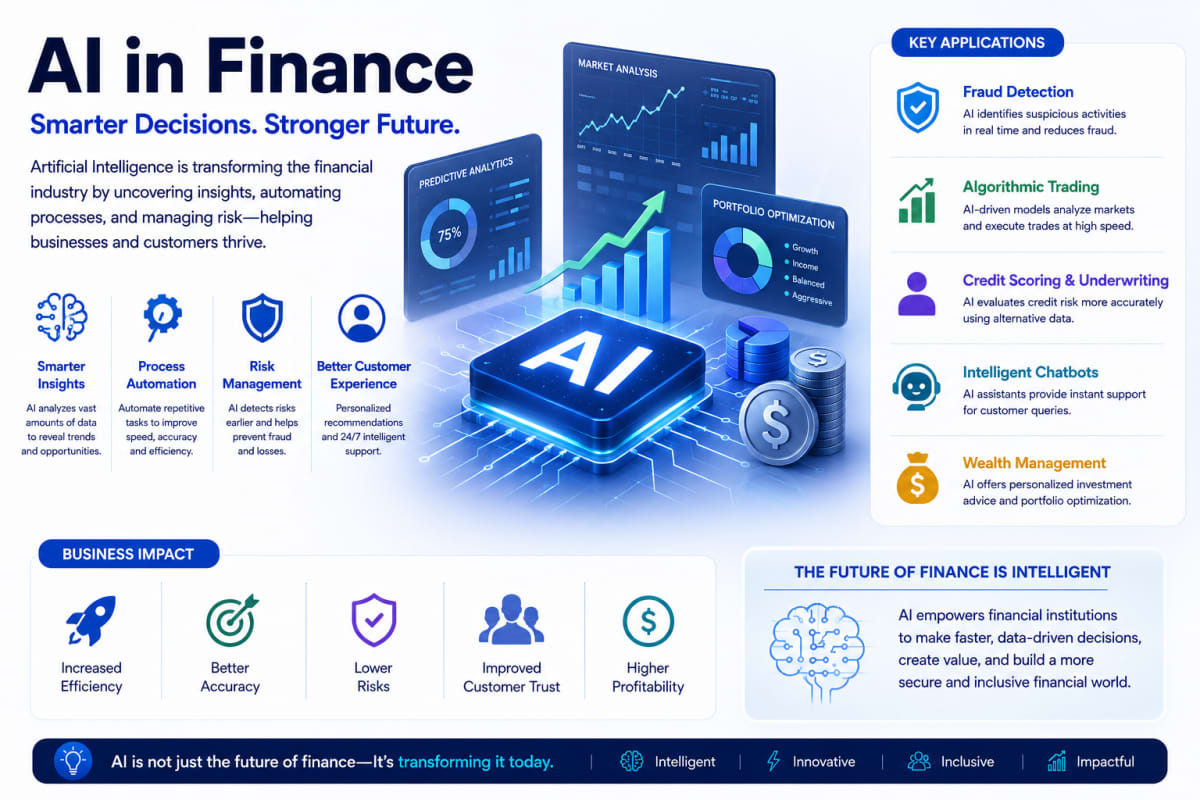
Fraud detection is the clearest win for AI in finance. Traditional rules are rigid: block a card if a transaction exceeds a certain amount or flag purchases from specific countries. Fraudsters quickly learn and work around these rules.
AI takes a different approach. It learns what normal behavior looks like for each account, then watches for deviations. A model weighs dozens of signals at once: time of day, merchant, location, device, spending pattern, and how the purchase compares to thousands of similar accounts.
How It Works in Practice
When you tap your card and the transaction clears in under a second, an AI scoring system has likely already judged the risk. Low score? It approves. Something looks off? It may add verification or hold the charge. This happens constantly and invisibly.
The result is fewer false alarms. Older systems blocked legitimate purchases so often that customers grew frustrated. A well-tuned model reduces interruptions while still catching real fraud.
Forecasting and Planning
Forecasting is the other major use. Whether predicting revenue, demand, or cash flow, AI studies historical patterns and seasonality to produce projections that adjust as new data arrives.
For a small business, this might mean a tool that predicts when cash will run tight based on invoicing and payment history. For a larger company, it might mean demand models that help plan inventory or staffing. The model does not guarantee the future, but it gives a more grounded starting point than a gut estimate.
Where Forecasts Help Most
- Cash flow: spotting a shortfall weeks before it happens, so you have time to act.
- Revenue planning: setting realistic targets based on past trends rather than wishful thinking.
- Budgeting: catching when a category is drifting over plan early in the cycle.
Other Practical Uses
Beyond fraud and forecasting, AI shows up across finance in quieter ways. Document processing tools read invoices and receipts and pull relevant numbers automatically. Credit models assess loan risk using a wider range of signals than a simple score. Customer support chatbots answer routine banking questions so staff can handle complex cases.
For everyday operations, AI can also categorize expenses, reconcile accounts, and draft first versions of financial summaries. None of this replaces a finance team, but it removes hours of manual work each week.
What AI Still Cannot Do
It helps to be honest about the limits. AI is good at patterns, but it does not understand context the way a person does. A model might flag a large transaction as suspicious when you know it is a planned equipment purchase. It can also inherit bias from the data it learned on, which matters greatly in areas like lending.
Financial decisions also carry regulatory weight. Many rules require that decisions be explainable, and some AI models are hard to interpret. For this reason, the strongest setups keep a human in the loop for anything consequential. The model recommends; a person decides.
How to Start
You do not need a data science team to benefit. Most accounting platforms, banks, and finance tools already include AI features such as anomaly alerts, automated categorization, or cash-flow forecasts. Turn those on first and learn what they do well before reaching for anything custom.
When you evaluate a dedicated tool, ask how it handles your data, whether its outputs can be reviewed, and what happens when it gets something wrong. A good vendor will answer clearly. Treat any tool that promises perfect predictions with healthy skepticism.
Frequently Asked Questions
Is AI in finance safe to trust with my money?
AI is a tool, not a decision-maker on its own. The safest setups use it to surface insights and catch problems while keeping people in control of important choices. Always review what a model recommends before acting on large or irreversible decisions.
Do I need to be technical to use AI finance tools?
No. Most useful features are already built into banking apps, accounting software, and payment platforms. You turn them on and review the results. The technical work happens behind the scenes, handled by the vendor.
Can AI predict the stock market?
Not reliably. AI can analyze market data and find patterns, but markets are influenced by countless unpredictable factors. Be cautious of any product that claims guaranteed returns or perfect market predictions.
The Takeaway
AI in finance is most valuable when it handles repetitive, high-volume work that wears people down: scanning for fraud, processing documents, and building forecasts from history. Used this way, with humans reviewing the decisions that matter, it gives finance teams more time for judgment and strategy. Start with features already in your existing tools, and expand only when you see real value.
Written by
Co-founder of Tool Directory AI. Tests and reviews the AI tools listed here.